As a leader – what questions do you ask of yourself the night before the ‘Big Game’?

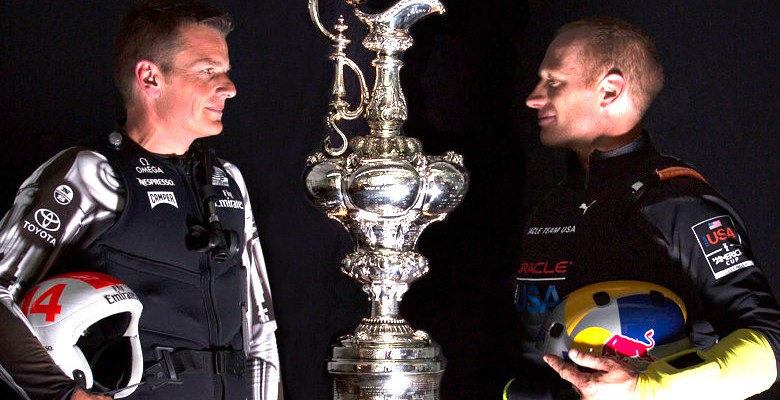
Dean Barker and James Spithill

You know last night had to be a long night for both Dean Barker (ETNZ) and James Spithill (Oracle USA) on the eve of what will be the most epic battle in the history of sailing. Sitting in very different places looking at the same objective – they must have been wrestling with very different questions.

Dean Barker ETNZDean Barker – up 8 to 1 a week ago, with just one win between The Cup and his team & country. Now – bearing the mental burden of a staggering losing streak.

James Spithill USAJames Spithill – behind 1 to 8 last week after starting with a 2 point penalty – now riding the wave of one of the greatest come-back stories in all of sport… And they meet this afternoon (pending wind) in the Super Bowl of sailing – winner take all.

The Cup brings opportunities AND burdens that go above and beyond any other sailing competition. In addition to the sailing team and boat – there are hundreds (thousands) of people that have made each of these campaigns possible in these areas:
• Technology design, building & maintenance
• Business organization; sales, marketing, finance, legal etc.
• Fitness; nutrition, exercise, rehab
• Media
• Corporate sponsors & private supporters, not to mention…
• Fans with raging national pride

With all that on their shoulders…
 What are they thinking?
 What questions kept them awake last night?
 What questions did they wake up to this morning?
The questions they ask of themselves will bring clarity of priorities and focus. As stated in the NY Times article ‘Distilling Wisdom of Effective C.E.Os’ April 17, 2011, ‘The greatest contribution a CEO makes to their organization may be asking the right questions.’

As a leader, what questions are you asking of yourself the night before the ‘Big Game’?

AC Stand off

What questions do we need to ask? A life lost.

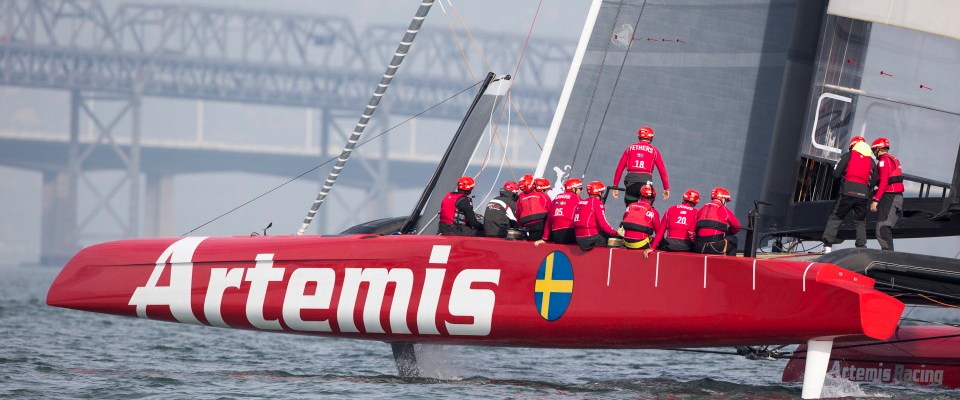
Artemis Racing, Day two sailing the AC72, 15 November 2012, Alameda, USA

This is going to be a tough day in the sailing world, as we grieve the loss of a great athlete and friend in Andrew Simpson.

Emerging out of the grief as always – will be the questions. In catastrophic failures there are always questions. And the most important thing will be – what are the best and right questions to ask? Change, if it is to be made will be driven by these questions. If the right questions being asked – the important things will change and the right things will stay the same. If the wrong or lack of good questions are asked – the wrong things will change or stay the same.

Artemis Racing, Day two sailing the AC72, 15 November 2012, Alameda, USA

So what are the right questions to ask?

  • What does Paul Cayard need to ask himself and his team?
  • What does Iain Murray and AC Event Management need to ask themselves?
  • The lawyers? The sailors? The host towns?
  • What are the productive questions for the sport itself to wrestle with?

Racing big fast sailboats is a risky sport. Competition, by design, creates the environment for risk. That’s the nature of competition. High-tech platforms and extreme environments add additional risk to the equation – whether it be high speed downhill skiing, racing cars, planes and powerboats, snowboarding & skateboarding half pipes or hundreds of other sports. As we saw on the road to the Final Four – you can compete inside a building on a small square of wooden floor with a ball and a hoop and still risk extreme injury.

A big failure does not mean the competition should stop, or the platforms should be downgraded in performance, or the athletes should be limited in what they can pursue in excellence – but it does mean that risk needs to be assessed.
In light of this catastrophic event…

  • What are the real risks going forward?
  • What risks are we willing to live with?
  • What risks must we decrease or eliminate?
  • and ultimately – How do we manage these levels of risk we identify?

These are the same type of questions we have to ask ourselves as a nation when it comes to national security, or health issues or product development. We can’t eliminate risk. And the more risk we work to eliminate – the more our freedom to move around, use products and seek unconventional solutions may be limited. Some limiting of risk is important – to protect us from unforeseen greater harm. However, there comes a point in the ‘risk elimination equation’ when the limits that would be imposed on us go beyond what we are willing to embrace. How safe do we really want to be? and thus – what are we willing to do/give up in order to achieve that level of safety? Do we shut down airports, public transportation and big audience events so terrorists have less of a chance of wreaking havoc?

These are very hard questions that need good and courageous thinking, and dialogue.

As the AC teams and all involved hit the ‘pause’ button to ask questions – I hope they are the right questions. The questions that deal with risk. When risk is clearly identified and quantified – it can be managed.

Part of Andrew’s legacy – will be for all of us to ask the better questions.

The $136 Billion Tweet – Ouch!

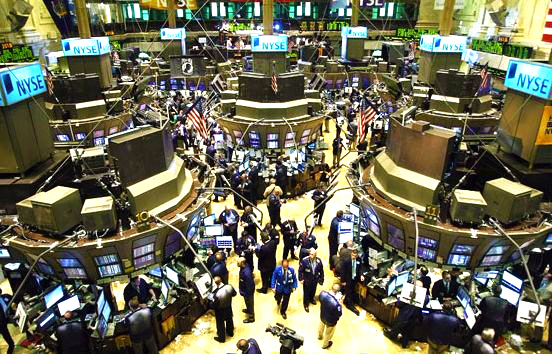
New York Stock Exchange

Our digital age has equipped us with tools we do not fully know how to use and has opened up caverns of liability that we are only just getting a glimpse of as incidents like last week’s fake tweet that caused the Stock Market to plummet.

• A tweet that cost the stock market $136b in one hour
• A request for crowd sourcing images which falsely identified someone as a terrorist
• Email scams that steal billions from naive elderly
• A search engine company gathers and sells private information

NYSE

An excerpt from an article in the weekly ‘Institute for Global Ethics’ newsletter:
A fake message on Twitter that momentarily sent the stock market plummeting last week has raised ethics questions not only about phony messages but also about the automated trading systems that are programmed to dump stocks when search engines detect bad “news.” The New Statesman reports that a phony tweet from a hacked news agency account purported that the White House had been attacked and President Obama injured. “Within six minutes the Tweet was read by two million followers, re-tweeted 1,181 times and sent the Dow Jones Industrial average and Standard & Poor’s 500 Index tumbling 1 per cent (erasing $136 bn) and dramatically weakening the dollar. Spectators rushed to the White House to see … absolutely nothing,” writes the New Statesman. The incident, reports Bloomberg, highlights the responsibilities of social media to improve security as well as the potential for out-of-control trading programs, unsupervised by humans, to tank the economy — even if only temporarily. Notes Bloomberg: “For all the concern over cyber warfare and the need to fend off sophisticated state-sponsored hacking attacks, here’s a discomforting thought: Apparently all you need to disrupt the world’s biggest economy is a stolen Twitter password.”
[Read More]

We have unleashed a vital and critical new age of communication and information capacity. But we have not yet figured out how to regulate, protect and prosecute major abuses of these new digital tools.

As we bushwhack our way through the unknown risks and potential abuses of our new digital age – What do we need to learn in order to be safe and successful?
– as individuals
– as companies
– as countries
– as a global community?