What is your Gold Standard?

Olympic Gold Medal, 2014 Sochi

Getting the best results from your team requires a consistent process that measures performance tied to a specific standard.

In a recent Fast Company article, Michael Phelps’ coach Bob Bowman has a few things to say about getting the most performance out of people. Coaching 22 gold medals from one athlete gives him a lot of authority to speak as to the level of standards that need to be set in order to achieve consistent excellence:

sochi-2014-olympic-medal_large_verge_medium_landscapeDETERMINE YOUR GOLD STANDARD.
“Each business has a gold standard,” Bowman says. It’s up to the leadership to decide what that standard is and how the organization gets there. Once the gold standard is set, everyone on the team needs to buy into it, he says. “We (the staff and athletes at the North Baltimore Aquatic Club where Bowman is CEO) try to be very process-oriented, performing up to a certain standard every day,” Bowman says, “(You can only) control what you can control.”

‘Disruption’ and ‘innovation’ are now the norm in our daily work flow. It is more critical than ever to determine what we CAN control and create process which will consistently delivery our high standards in regardless of the unforeseen yet inevitable challenges. We make our day to day business decisions based on what we perceive as standards for success. If these standards are not clearly articulated AND agreed upon by the entire organization – we will waste resources and experience failure. And if we want to achieve sustainable success, then we must create consistent process which deliver these standards or we will experience inconsistent results.

What is your organization’s standard for excellence?
and HOW do you consistently achieve this Gold Standard?

What made Martin Luther King an extraordinary leader?

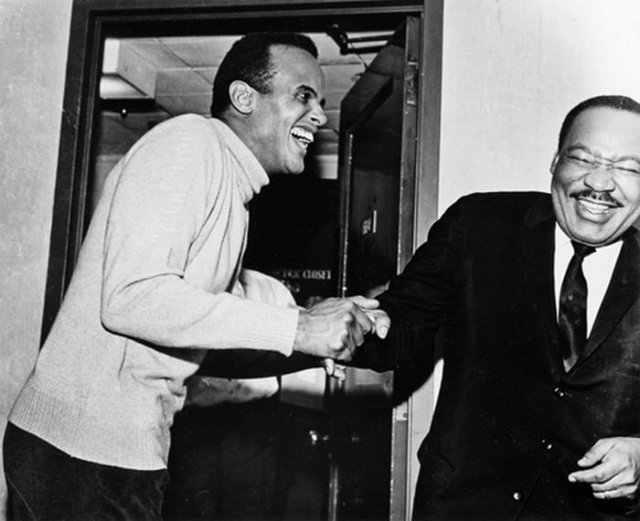
Harry Belafonte and Martin Luther King

On the 85th anniversary of Martin Luther King’s birthday, Fast Company looks behind the legend to the man, to highlight four attributes that profoundly contributed to his effectiveness as a transformative leader. MLK was extremely intentional about everything he did and said. In order to be effective in our intentionality – we must commit ourselves to constant self examination so that we can choose the best path as a leader.

1) Emotional Agility
Being aware enough of your emotions, and then choosing a response rather than reacting. What level of emotional agility do you possess – especially with the emotions of anger, confusion or fear? We will write on this more here at Courageous Thinking

2) Systems Thinking
We often focus too much on winning the battle, and lose sight of the war. No one thing creates sustainable change. It must occur within a system. What is the change we want to make? What is the larger system we need to effect, and work in, in order to make that change?

3) Occupy DC
To change a system, it takes a combination of critical mass and changing policy. MLK knew that DC was the platform he needed in order to cast his ‘Dream’. What platform do you need in order to create the change you are committed to?

4) Humor
It is scientifically proven that laughter creates positive physiological effects in addition to relational healing and fostering increased creative thinking. Where can you add appropriate humor to a situation?

Leadership does not require us to rise above our humanity, but to be aware of who we are, and to CHOOSE the best path to create healing and wholeness. Whether our change objective is within the spheres of civic, corporate, mission or social success – we must be intimately aware of who we are, and choose our response and strategy.

As a leader – what questions do you ask of yourself the night before the ‘Big Game’?

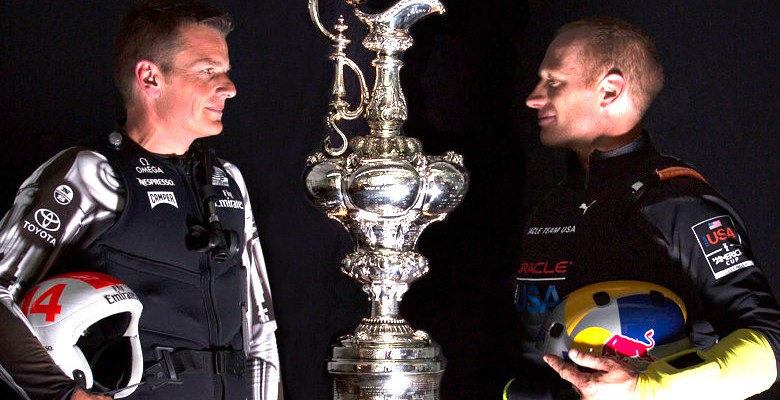
Dean Barker and James Spithill

You know last night had to be a long night for both Dean Barker (ETNZ) and James Spithill (Oracle USA) on the eve of what will be the most epic battle in the history of sailing. Sitting in very different places looking at the same objective – they must have been wrestling with very different questions.

Dean Barker ETNZDean Barker – up 8 to 1 a week ago, with just one win between The Cup and his team & country. Now – bearing the mental burden of a staggering losing streak.

James Spithill USAJames Spithill – behind 1 to 8 last week after starting with a 2 point penalty – now riding the wave of one of the greatest come-back stories in all of sport… And they meet this afternoon (pending wind) in the Super Bowl of sailing – winner take all.

The Cup brings opportunities AND burdens that go above and beyond any other sailing competition. In addition to the sailing team and boat – there are hundreds (thousands) of people that have made each of these campaigns possible in these areas:
• Technology design, building & maintenance
• Business organization; sales, marketing, finance, legal etc.
• Fitness; nutrition, exercise, rehab
• Media
• Corporate sponsors & private supporters, not to mention…
• Fans with raging national pride

With all that on their shoulders…
 What are they thinking?
 What questions kept them awake last night?
 What questions did they wake up to this morning?
The questions they ask of themselves will bring clarity of priorities and focus. As stated in the NY Times article ‘Distilling Wisdom of Effective C.E.Os’ April 17, 2011, ‘The greatest contribution a CEO makes to their organization may be asking the right questions.’

As a leader, what questions are you asking of yourself the night before the ‘Big Game’?

AC Stand off